

Key Takeaways
- A manual wheelchair requires upper-body strength or a caregiver. A power wheelchair offers independent mobility with a joystick.
- Manual chairs excel indoors on smooth surfaces. Power chairs handle outdoor, uneven terrain with ease.
- While manual wheelchairs are cost-effective with minimal upkeep, power wheelchairs have higher upfront costs and require regular maintenance.
- Manual chairs fold easily for transport in any vehicle. On the other hand, power chairs are heavier and often require a specialized vehicle lift or a ramp.
- Many users keep a manual chair for quick trips and travel while relying on a power chair for daily, long-distance independence.
Whether you are recovering from an injury, managing a progressive condition, or seeking a mobility solution for a family member, you need to understand the differences between a manual and a power wheelchair. The choice goes beyond deciding between pushing wheels or using a motor. You must evaluate physical strength, the environments you navigate daily, your budget, and many other relevant factors. But by learning about your options and how they compare, you can make an informed choice that restores the independence and long-term support you deserve.
What Is a Manual Wheelchair?
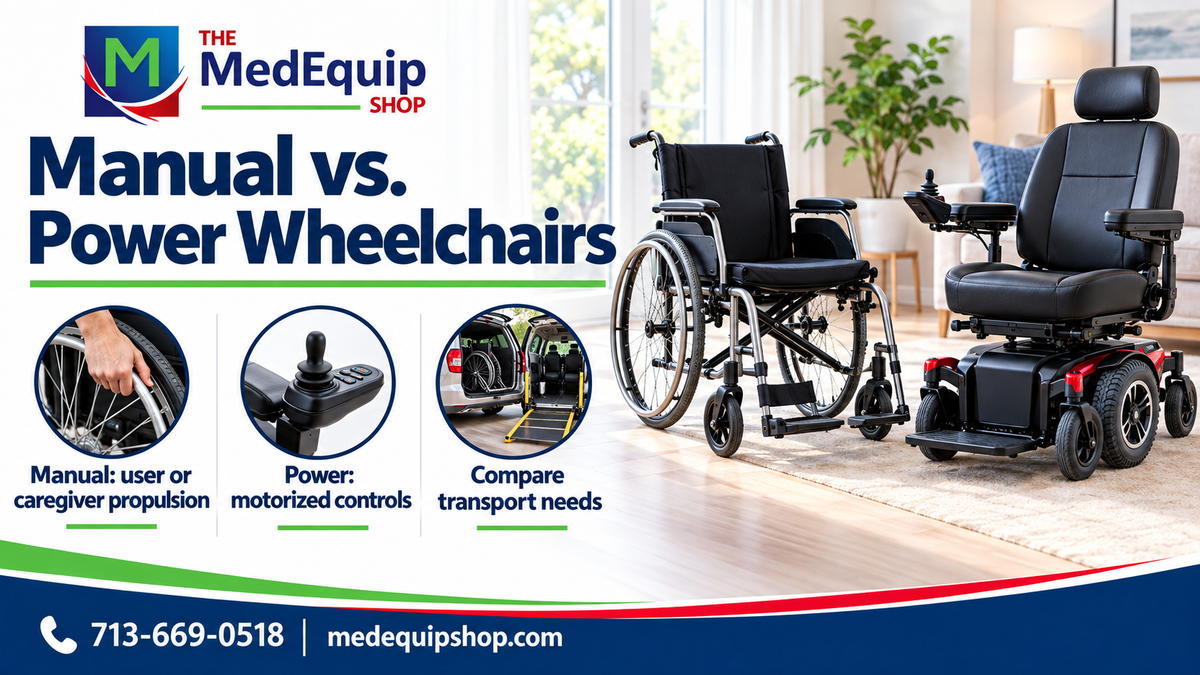
A manual wheelchair is a mobility device propelled by the user’s physical effort or by a caregiver pushing from behind. These feature large rear wheels with handrims for self-propulsion and smaller front casters for steering. They are generally lightweight, simple in design, and built for easy transport and storage.

How Manual Wheelchairs Work
Users move a manual wheelchair by gripping the handrims on the rear wheels and pushing forward or backward. Turning involves pushing one wheel while holding or pulling the other. There are other types, such as transport chairs designed specifically for caregivers to push, but all manual wheelchairs lack motors and batteries. That means that they rely entirely on human energy.
Who Benefits Most From Manual Wheelchairs?
Manual wheelchairs work best for individuals who retain sufficient upper body strength and endurance to propel themselves without experiencing severe fatigue or pain. They are also an excellent choice for those who need a wheelchair only occasionally, such as for short outings, or individuals who rely on a caregiver for mobility. They suit people who travel frequently, as their lightweight and foldable nature makes them easy to stow in a standard car trunk.
What Is a Power Wheelchair?
A power wheelchair, often called an electric wheelchair, is a motorized mobility device powered by rechargeable batteries. Users operate the chair using a programmable joystick or alternative control systems. These chairs are designed to provide maximum independence and often feature advanced seating systems for enhanced comfort, though they come at a higher price point due to their additional features.
How Power Wheelchairs Operate
Power wheelchairs use electric motors connected to the drive wheels (which can be front, mid, or rear-wheel drive). The user controls the speed and direction via a joystick mounted on the armrest. The batteries, typically located under the seat, require regular charging, usually overnight, to provide a full day of mobility. Advanced models may also include motorized functions to tilt, recline, or elevate the seat.
Who Should Consider a Power Wheelchair?
A power wheelchair is the best option for individuals with limited upper body strength, severe fatigue, or conditions that prevent them from safely propelling a manual chair. They are required for those who need to travel long distances independently or navigate challenging outdoor terrains. If maintaining independence in daily activities without relying on a caregiver is a priority, a power wheelchair is often the necessary choice.
Manual vs. Power Wheelchair: Key Differences
If you are looking to see which wheelchair option is better, it helps to compare them side by side. These chairs have many similarities, but they also have some key differences.
Mobility and Ease of Use
Manual wheelchairs offer excellent maneuverability in tight indoor spaces, but they require continuous physical effort. Power wheelchairs provide effortless mobility over longer distances and varied terrain, though their larger footprint can make navigating narrow spaces challenging.
Physical Effort Required
The most distinct difference is the physical demand. Manual wheelchairs require significant upper-body strength and stamina, which can provide beneficial exercise but also carry the risk of repetitive strain injuries to the shoulders and wrists over time. Power wheelchairs eliminate this physical strain entirely, so users can conserve energy for other daily activities.
Comfort and Positioning Features
While manual chairs can be fitted with custom cushions and adjustable backrests, power wheelchairs offer superior, dynamic comfort features. Many power models include power tilt-in-space, reclining backrests, and elevating leg rests. These features are critical for users who spend all day in their chair, as they help redistribute pressure and prevent skin breakdown.
Portability and Transportation
Manual wheelchairs are highly portable; most models fold compactly and weigh between 30 and 50 pounds, making them easy to lift into a car. Power wheelchairs are substantially heavier, often weighing over 150 pounds due to the motors and batteries. Transporting a power chair typically requires a specialized vehicle lift, a ramp, or an accessible van, though some newer, lightweight folding power chairs are entering the market.
Indoor and Outdoor Performance
Indoors, manual chairs often have the advantage in small homes and older buildings due to their narrow frames. Outdoors, power wheelchairs excel. Their stronger motors, larger wheels, and suspension systems handle uneven sidewalks, grass, and inclines far better than a manual chair, which can quickly become exhausting or unsafe on rough terrain.
Maintenance and Repairs
Manual wheelchairs require minimal maintenance—primarily checking tire pressure, cleaning the frame, and occasionally replacing worn brakes or cushions. Power wheelchairs are complex machines that require regular battery charging and periodic replacement. Repairs to the motors or electronic joysticks require specialized technicians and can be costly.
Cost and Long-Term Investment
Manual wheelchairs are generally much more affordable, with basic models starting around a few hundred dollars. Power wheelchairs represent a significant investment, often ranging from $2,000 to over $10,000 for highly customized models. For those with a documented medical necessity, private insurance may cover a substantial portion of the cost for either type.
Advantages of Manual Wheelchairs
Manual wheelchairs are often an ideal choice. They are more convenient in many situations, and they come at a lower cost.
Lightweight and Portable Design
The ability to fold a manual wheelchair and place it in the back of any standard vehicle provides unmatched convenience for travel and quick errands.
Lower Upfront Costs
With a significantly lower purchase price, manual wheelchairs are an accessible option for those on a strict budget or those who only need temporary mobility assistance.
Simple Maintenance Requirements
The lack of electronic components means fewer things can break. Maintenance is straightforward, and repairs are generally inexpensive and quick.
Encourages Physical Activity
For users with the necessary strength, self-propelling a manual wheelchair provides valuable cardiovascular exercise and helps maintain upper-body muscle tone.
Advantages of Power Wheelchairs
Power wheelchairs also have plenty of benefits. They are durable, perform well over longer distances, and require no manual effort to operate.
Greater Independence and Convenience
Power wheelchairs allow users to travel longer distances, run errands, and navigate their communities entirely independently, without needing a caregiver to push them.
Reduced Physical Strain
By eliminating the need to push, power chairs protect the user’s shoulders and wrists from repetitive strain injuries and prevent severe fatigue.
Advanced Seating and Positioning Options
The ability to electronically adjust seating positions throughout the day is vital for long-term comfort, pressure relief, and independence.
Better for Extended Daily Use
With long-lasting batteries and robust suspension, power wheelchairs are designed to be the user’s primary seat from morning until night, both indoors and outdoors.
Factors to Consider Before Choosing a Wheelchair
If you are considering a wheelchair for yourself or a loved one, you need to assess a wide range of factors. It is not as simple as simply picking the first one you see.
Mobility and Strength Levels
Assess the user’s upper body strength and cardiovascular endurance honestly. If pushing a chair causes pain or exhaustion after a short distance, a power chair is likely necessary.
Daily Activities and Lifestyle Needs
Consider what the intended user does every day. If they work full-time, enjoy outdoor hobbies, or frequently travel long distances independently, a power wheelchair supports an active lifestyle. If they primarily stay indoors or only need the chair for short trips with family, a manual chair is likely more than enough.
Home Accessibility and Living Environment
Evaluate the living space. Are the doorways wide enough for a power chair? Is there a safe, accessible place to charge it overnight? If the person in question lives in a small apartment with narrow hallways, a manual chair might be the only practical option; otherwise, you may need to make home modifications to accommodate a larger power chair.
Transportation and Travel Requirements
Think about how the user gets around town. If they rely on a standard sedan, a manual wheelchair is easy to transport. If you choose a power chair, you must factor in the cost of a vehicle lift or an accessible van.
Budget and Insurance Considerations
Determine your budget and check your insurance coverage. While a power chair might be ideal, it requires a doctor’s prescription and a thorough seating evaluation to qualify for insurance coverage. Also, consider the long-term costs of battery replacements and maintenance.
Long-Term Mobility Needs
Consider the user’s long-term needs. If this is a temporary solution for a minor health issue, a manual chair can likely help return a high level of independence. However, if there are progressive conditions or serious medical concerns at play, investing in a power wheelchair early on can prevent the need to purchase new equipment as mobility declines.
Can You Benefit From Having Both a Manual and a Power Wheelchair?
Many full-time wheelchair users find that owning both types provides the ultimate flexibility. A power wheelchair serves as the primary device for daily independence, work, and outdoor activities, and when needed, the user can switch to a backup manual wheelchair when the power chair is impractical.
Having a manual chair on hand also provides peace of mind if the power chair needs repairs or a power outage prevents battery charging. This dual approach ensures that the user is never left without a mobility option.
Find the Right Wheelchair at MedEquip Shop
At MedEquip Shop, we understand that choosing the right wheelchair is a critical decision. Medical equipment can be confusing. We bring clarity, options, and next steps so you can make the best choice for your family. Whether you need a lightweight manual wheelchair for easy transport or a fully customized power wheelchair for daily independence, our knowledgeable staff is here to help. Call us today to learn more, or come visit us at 1645 S Voss Rd, Houston, TX 77057 to test different models and find the perfect fit for your lifestyle.
Frequently asked questions
Is a Power Wheelchair Better Than a Manual Wheelchair?
Neither is better than the other, because they are designed to serve different needs. A power wheelchair is better for individuals who lack the upper-body strength to self-propel or need to travel long distances independently. A manual wheelchair is better for those who want a lightweight, portable option and have the strength to use it.
Which Wheelchair Is Easier to Transport?
Many manual wheelchairs fold and are easier to lift into a vehicle. Some travel or folding power chairs are also portable; check the exact weight, dimensions, and loading requirements.
Are Power Wheelchairs Covered by Insurance?
Insurance may cover a medically necessary power wheelchair when plan requirements are met. Confirm evaluation, prescription, supplier, prior authorization, and reimbursement rules before purchase.
How Long Do Wheelchairs Typically Last?
With proper care and maintenance, a quality manual wheelchair can last 5 years or more. Power wheelchairs typically have a similar lifespan for the frame and motors, but the batteries will need to be replaced every 1 to 2 years, depending on usage.