

Helping someone you love regain independence can make a meaningful difference in their day. Being able to move around, join family activities and make more choices for themselves can support their confidence, sense of control and emotional well-being.
Choosing a power wheelchair can bring up a lot of questions. Will it move comfortably through your home? Can someone lift it into the car? Will the seat still feel right after more than a quick trip?
Start with the person, the home and the daily routine. Then compare the exact model's seating, dimensions, weight capacity, transport requirements and battery range. The lightest chair or the longest advertised range is useful only when the rest of the chair fits your needs.
Here is a practical way to narrow down your options before buying a power wheelchair for yourself or someone you love.
What do you need your power wheelchair to do?
Think through a normal day. You may need to get from the bedroom to the kitchen, turn into a small bathroom, visit family, or load the chair into a vehicle several times a week. Write down the activities that matter most and the places where getting around is difficult.
If you need help with posture, pressure management, transfers or operating the controls, bring your clinician or therapist's recommendations into the conversation. A short product description cannot determine your seating needs.
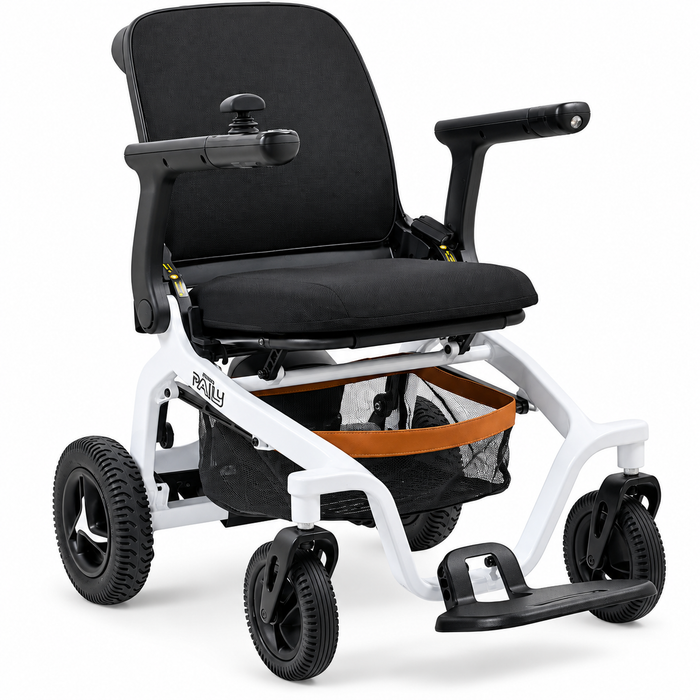
- Mostly at home: Pay close attention to doorway clearance, turning space, seating and transfers.
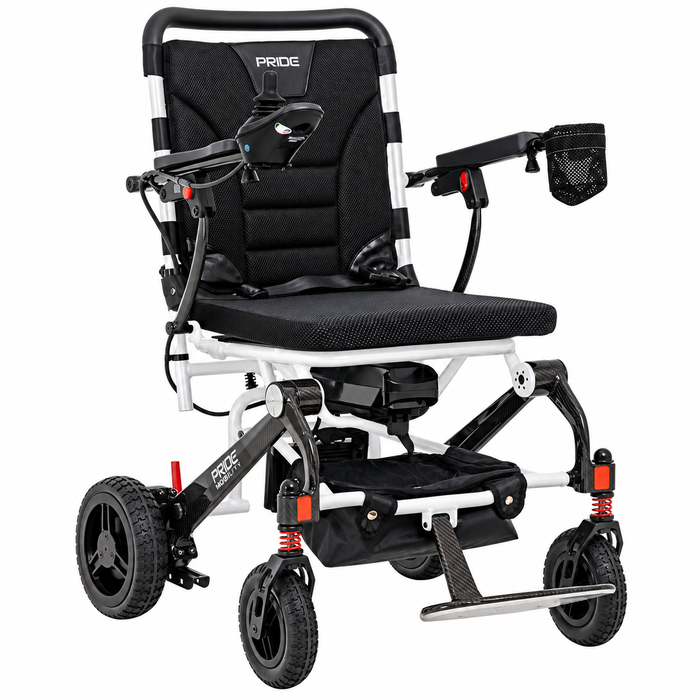
- Frequent car trips: Compare folding or disassembly, the heaviest part you will lift, and your vehicle's cargo opening.
- Longer daily use: Compare seat fit, support, adjustment options and the battery plan for your routine.
Explore power wheelchair types
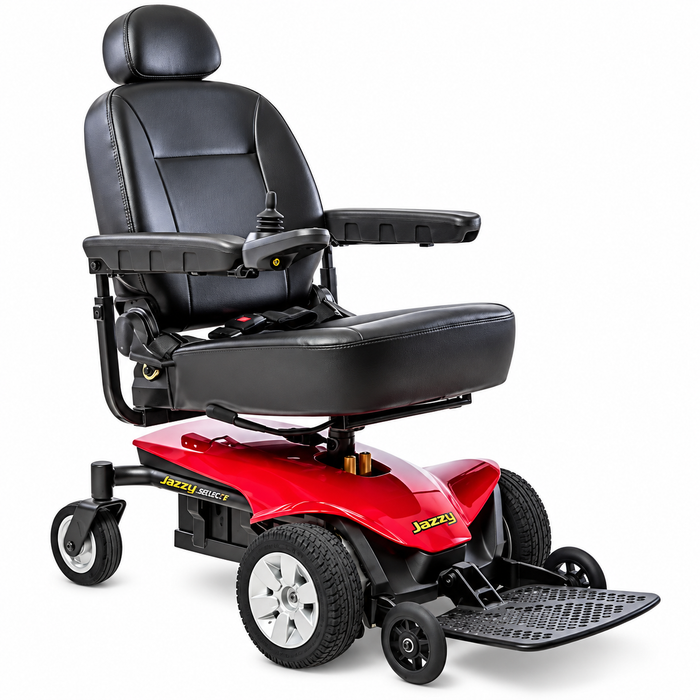
Start with the design that fits your routine. Some chairs belong in more than one category.
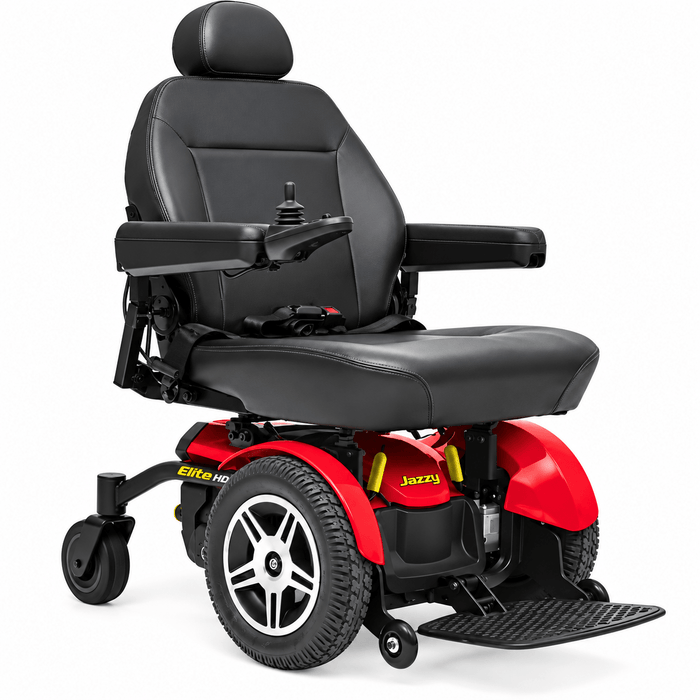
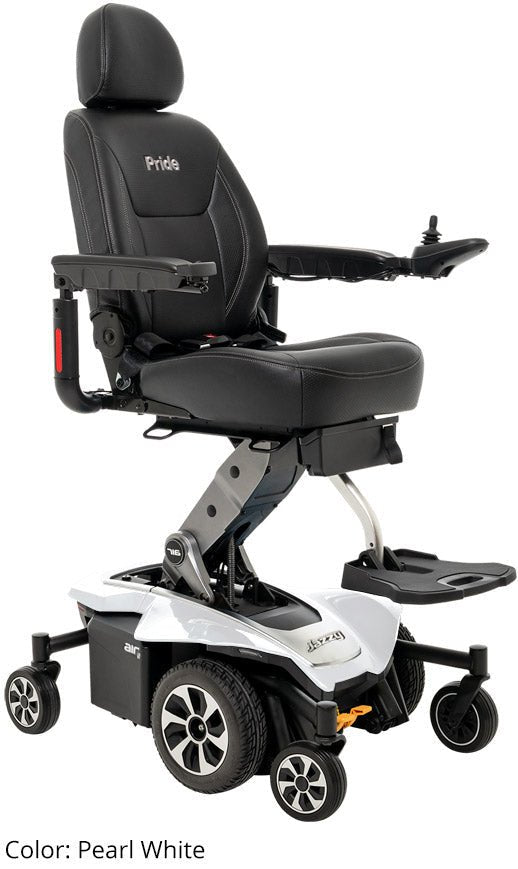

Compare the features that matter to you
Use this overview to narrow your search. Categories can overlap. Capacity and range below are broad shopping estimates, not specifications for every model.
| Feature | Folding | Travel & Portable | Full Size | Heavy Duty | Elevating |
|---|---|---|---|---|---|
| Main priority | Compact storage | Easy transport | Everyday mobility | Higher capacity | Adjustable seat height |
| Transport | Check total lift weight | May fold or disassemble | May need a vehicle lift | Check lift requirements | May need a vehicle lift |
| Estimated capacity | 250–350 lbs. | 250–350 lbs. | 300–350 lbs. | 400–600 lbs. | 300 lbs. |
| Estimated range | 5–20 miles | 8–16 miles | 15–30 miles | 12–22 miles | 15–20 miles |
| Seat elevation as a defining feature | No | No | No | No | Yes |
| Seating guideline | Compact; options vary | Compact; options vary | Often more cushioning and adjustments | Typically roomier reinforced seating | Full-size support with seat-height adjustment |
Some models fall outside these estimated category ranges. Always confirm the exact model, configuration, capacity and battery specifications. Larger chairs often offer more cushioning and seating adjustments, but comfort depends on personal fit. On mobile, swipe across the table.
Will the chair fit through your home?
Measure the route you actually use, including the bedroom, bathroom and kitchen. Open doors as you normally would and measure the clear opening at its narrowest point. The size printed on a door is not necessarily the usable space.
Compare those measurements with the chair's overall width and length, including the joystick, foot supports and any accessories that affect clearance. Check the turning radius, too. Passing straight through a doorway does not mean you can make the turn immediately afterward.
- Measure the narrowest doorway and tightest hallway turn.
- Note thresholds, floor changes and any steps along the route.
- Check space beside the bed, toilet and favorite chair for transfers.
- Measure table clearance and the height of surfaces you use every day.
Take photos and bring a simple sketch with your measurements. For a ramp or slope, compare the exact model's manual and rated limits rather than assuming every power chair can manage the same route.

How do weight capacity and seating fit work together?
Weight capacity is the manufacturer's maximum rating. Confirm what is counted in that rating, including carried items or accessories, and stay within the model's limits. A capacity number does not tell you whether the seat is the right width or depth.
Compare the usable seat dimensions, back support, armrest adjustment and foot support. Check whether the joystick can be placed on your preferred side. If a particular cushion or positioning support has been recommended, confirm compatibility before ordering.
Try the chair long enough to notice whether you feel supported and can reach the controls comfortably. Larger chairs may offer more seating options, but size alone does not guarantee comfort.
Can you transport and lift the chair?
Ask whether the advertised weight includes the battery, cushion and other removable pieces. A chair's frame weight and its ready-to-use weight can be different.
If someone will lift it, compare the heaviest piece that person actually needs to handle. Try the folding or disassembly process, check the lifting points described in the manual, and measure the vehicle's opening as well as the space inside. If lifting is not practical, discuss a suitable vehicle lift or other transport arrangement.
Do not assume a folding chair is approved for use as a seat while riding in a vehicle. Follow the exact model's transport instructions and use an appropriate vehicle seat and restraint system unless the equipment is specifically approved for occupied transport.
How much battery range do you need?
Plan around a realistic day with a reserve for delays and detours. Published range is a manufacturer test rating. User weight, terrain, slopes, speed, temperature, battery condition and accessories can affect the distance you actually travel.
Ask how and where the battery charges, whether it can be removed for charging, and which charger is approved. Compare replacement-battery availability and cost along with the purchase price.
If you fly, contact the airline before booking with the exact chair and battery details. An airline-compliant battery description does not replace the airline's acceptance process or current travel requirements.

A portable example: the Pride Jazzy Carbon 27
The Jazzy Carbon 27 is one model to compare when reducing lift weight is a priority. Pride lists a carbon fiber frame, front suspension and these specifications:
- Weight without battery: 27.8 lbs.
- Weight capacity: 300 lbs.
- Maximum speed: Up to 3.7 mph.
- Battery range: Up to 9.3 miles per charge under manufacturer test conditions.
- Standard seat: 17 inches wide by 17 inches deep.
- Folded dimensions: 27.5 inches long by 23.4 inches wide by 13.38 inches high.
These are manufacturer ratings, not a promise of real-world range or personal suitability. The Carbon 27 and Carbon 27X are different models. Call us to confirm Carbon 27 availability, the supplied configuration and current pricing before making plans around it.
Review Pride's Jazzy Carbon 27 specifications and owner's manual for model-specific details.
What should you ask before buying?
- Does this exact model fit my seating and daily mobility needs?
- Can I navigate my measured doorway openings and turns?
- Can I manage transfers and operate the controls comfortably?
- How will we transport, lift and store the chair?
- What is included in the complete price, and which accessories cost extra?
- Who handles warranty service, and what parts, labor or visits are excluded?
- What is the return policy for this model and configuration?
Need help comparing power wheelchairs in Houston?
You do not need to know every model name before calling. Tell us about your home, the places you want to go, your measurements and your budget. We can help you compare available options and confirm what to expect before a visit.
Browse power wheelchair options, call 713-669-0518, or visit The MedEquip Shop at 1645 S Voss Rd., Houston, TX 77057. Please call ahead to confirm the specific models available to view.
The MedEquip Shop is a cash-pay provider and does not bill Medicare, Medicaid or private insurance directly. If you plan to use benefits, check with your treating provider and plan before purchasing.
Watch: Understanding power wheelchair coverage
If insurance is part of your decision, this MedEquip Shop video explains questions to ask before buying. Our store is a cash-pay provider and does not bill insurance directly.
Frequently Asked Questions
How do I choose a power wheelchair for my home?
Start with your seating needs and daily routine. Measure clear doorway openings, tight turns and transfer spaces, then compare the exact chair's overall dimensions, turning radius, seat fit, capacity and transport requirements.
Are folding and travel power wheelchairs the same?
The categories can overlap. Some travel chairs fold, while others disassemble. Check how the exact chair packs, the weight of the heaviest part and its folded or disassembled dimensions.
Does the listed chair weight include the battery?
Not always. Ask whether the advertised weight includes the battery, cushion and removable parts. Compare the weight you or your helper will actually lift.
Will a power wheelchair fit through my bathroom door?
Measure the clear opening with the door in its normal open position and compare it with the chair's overall width, including controls and accessories. Also check the space needed to turn into the bathroom.
How far can a power wheelchair travel on one charge?
Range depends on the model and conditions. Manufacturer ratings are affected by user weight, terrain, slopes, speed, temperature and battery condition. Plan your daily route with a reserve rather than relying on the maximum rating.
What are the Jazzy Carbon 27 weight and capacity ratings?
Pride lists the Jazzy Carbon 27 at 27.8 lbs without its battery, with a 300 lb weight capacity and up to 9.3 miles per charge under manufacturer test conditions. Carbon 27 and Carbon 27X are different models. Confirm the exact configuration and availability before ordering.
Can I take a power wheelchair on a plane?
Contact the airline before travel with the exact chair, battery specifications and handling instructions. Airline acceptance and current battery rules must be confirmed even when a manufacturer describes a battery as airline-compliant.
Can The MedEquip Shop help me compare models?
Yes. Call 713-669-0518 with your measurements, daily needs and budget. The Houston team can help compare available options. Call ahead to confirm specific models available to view at 1645 S Voss Rd., Houston, TX 77057.
Manufacturer specifications checked October 30, 2026. Specifications, configurations and availability may change.