

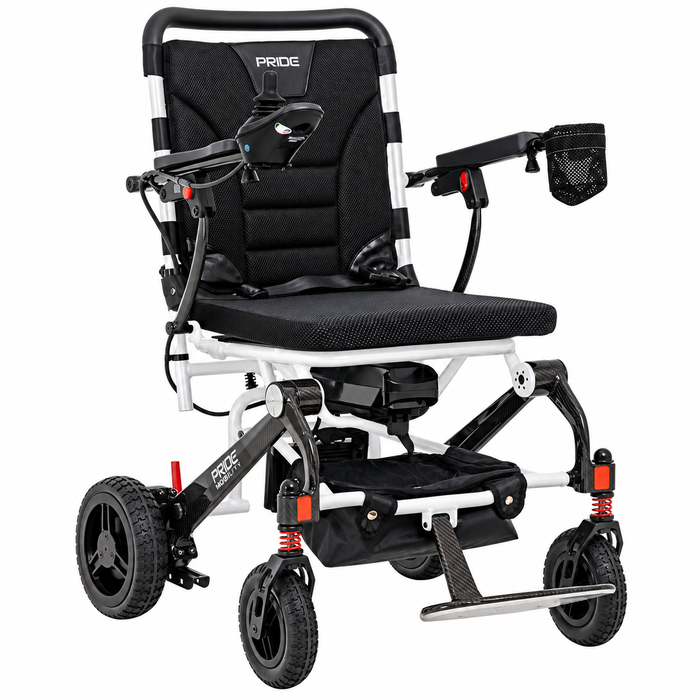
Folding Power Wheelchairs
Fold your chair for storage or transport. Compare folded dimensions, battery details and the weight you will need to lift.
View collection

Explore these six categories to narrow down your options. Some chairs fit more than one category.
Fold your chair for storage or transport. Compare folded dimensions, battery details and the weight you will need to lift.
View collection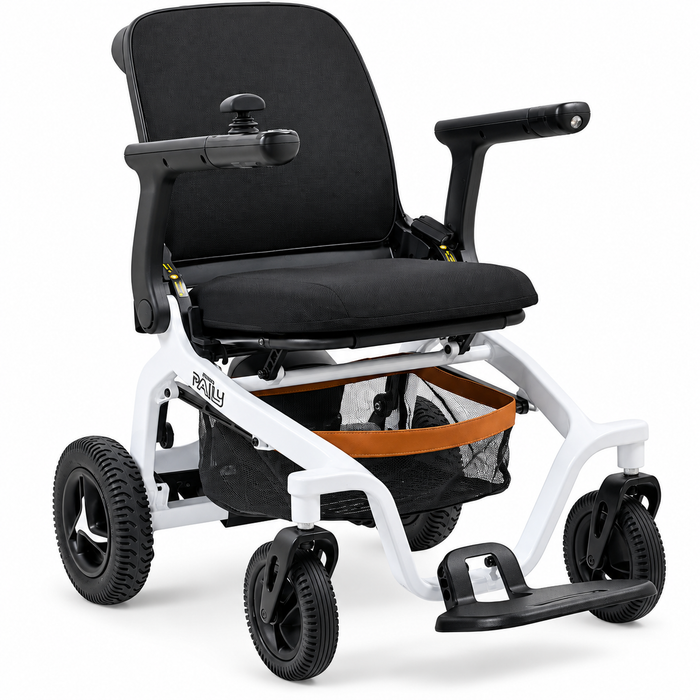
Take your mobility along for errands and trips. Explore compact chairs that fold or separate into manageable pieces.
View collection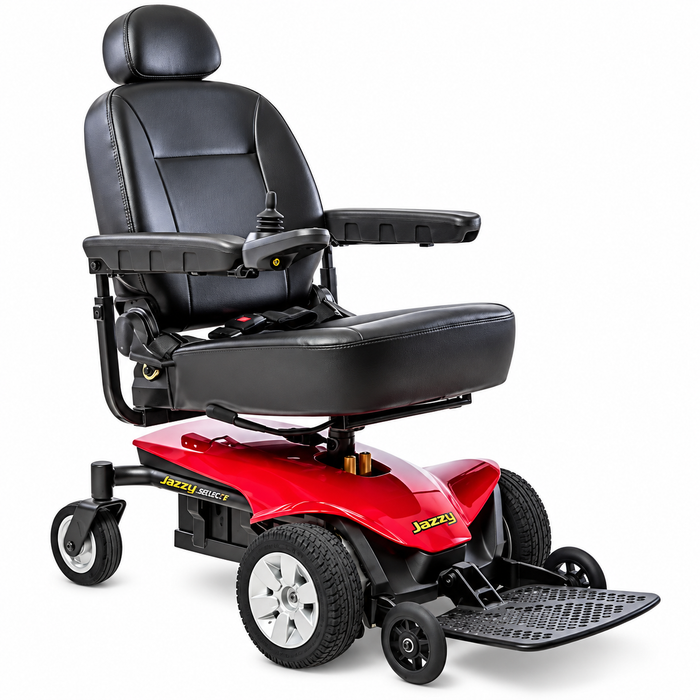
Find a comfortable setup for everyday mobility. Compare seating, turning space and the surfaces you use most.
View collection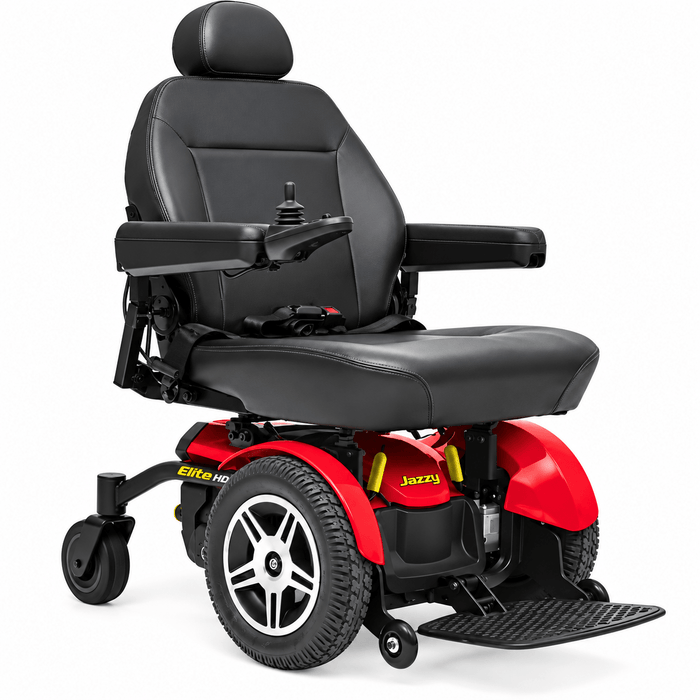
Explore options with higher weight capacities and roomier seating. Check the capacity and seat dimensions for each model.
View collectionBring everyday tasks within easier reach with a powered elevating seat. Compare available lift heights and model features.
Ask about elevating chairsFind accessories for your daily routine. Check compatibility with your exact wheelchair model before you order.
Explore accessoriesAll five types provide powered mobility. The difference is what each design prioritizes. Categories can overlap: a folding chair may also be portable, and an elevating chair may also be full size.
On smaller screens, swipe across the chart to compare all five types.
| Feature | Folding | Travel & Portable | Full Size | Heavy Duty | Elevating |
|---|---|---|---|---|---|
| Main focus | Compact transport and storage | Taking a chair along on outings | Everyday powered mobility | Higher capacity and roomier seating | Adjustable seated height |
| Transport approach | Folds; check lifting weight | May fold or disassemble | Often needs a suitable vehicle or lift | Check vehicle and lift requirements | Often needs a suitable vehicle or lift |
| Seating and support | Compact seating; portability comes first | Compact seating; padding and adjustments vary | Typically more cushioning, support and adjustments for daily comfort | Typically wider, roomier seating with reinforced support | Typically full size seating and support, plus adjustable seat height |
| Estimated weight capacity | 250–350 lbs. | 250–350 lbs. | 300–350 lbs. | 400–600 lbs. | 300 lbs. |
| Powered seat elevation | — | — | — | — | Yes |
| Estimated battery range per charge | 5–20 miles | 8–16 miles | 15–30 miles | 12–22 miles | 15–20 miles |
| Important measurements | Folded size and total lifting weight | Heaviest piece and vehicle opening | Overall width and turning radius | Seat size, overall width and capacity | Lift height, overall width and turning radius |
Use these estimates as a shopping guide. Capacity and range are approximate category ranges; some models fall outside them. Always confirm the exact chair’s rated capacity and battery specifications. Actual travel range depends on rider weight, terrain, battery condition and configuration. A dash means seat elevation is not a defining feature of that category; categories can overlap.
Comfort guideline: Larger chairs typically offer more cushioning, room and seating adjustments. The best comfort and support still depend on your fit and the exact seat configuration.
Whether you are choosing your first power wheelchair or replacing a chair you already use, start with your daily routine. Where will you use it? How will you transport it? What seating and support feel right for you? Our Houston team can help you compare the features that matter before you decide.
If you take your chair along for errands or trips, compare compact models that fold or separate into smaller pieces. Check overall dimensions, turning radius and the heaviest part you will need to lift. The way a chair disassembles varies by model, so confirm your loading plan and available vehicle space.
A folding design can make storage and transport easier. Compare folded dimensions, total lifting weight, battery access and seating adjustments. Cushion compatibility and available back support vary, so review the exact model rather than assuming every folding chair has the same seating options.
For everyday mobility, compare full size chairs by comfort, maneuverability and the spaces you use most. Front-wheel, center-wheel and rear-wheel drive designs handle differently. Review the turning radius, overall width and the manufacturer’s guidance for your indoor and outdoor routes.
If you need a higher weight capacity or roomier seating, start with heavy duty options. Check the manufacturer-rated capacity, seat width and depth, overall chair size and transport requirements for the exact configuration. Capacity alone does not tell you whether a chair is the right fit.
A powered elevating seat can help bring some everyday surfaces within reach and let you adjust your seated height for conversations. Compare lift height, seating options and any restrictions on driving while elevated. Follow the manufacturer’s instructions for surfaces, slopes and safe operation.
Need help narrowing down your options? Call (713) 669-0518 to talk with MedEquip Shop about fit, features and current availability.
Tell us where you plan to use your chair, how you will transport it and what feels comfortable. We can help you compare models, dimensions and availability.
Compare the weight capacity, seat width and seating options with your comfort and support needs.
Measure doorways, turns and storage space. Review overall width and turning radius for each chair.
Check product weight, the heaviest piece and how you will load the chair. For flights, confirm battery requirements with your airline.
A folding chair collapses for storage or transport. A portable chair may fold or disassemble into smaller pieces. Compare each model’s folded dimensions and lifting weight with your vehicle and storage space.
Check the manufacturer’s weight capacity and seat dimensions for the exact model and configuration. Compare these with your seating and support needs. Our team can help you review the available options.
Airline requirements depend on the chair and its batteries. Contact your airline before booking and review the manufacturer’s transport instructions for your specific model.
Driving range varies by model, battery, rider weight, terrain and operating conditions. Review the published range for the exact chair and configuration, and allow for your everyday route and charging needs.
Measure your doorways, hallways, tight turns and storage space. Compare those measurements with the chair’s overall width, length and turning radius. Also check seat dimensions and your vehicle’s available loading space.
Check the chair’s folded or disassembled dimensions against your vehicle’s cargo opening and interior space. Compare the total lifting weight and the heaviest piece with your loading plan. Some chairs require a vehicle lift or other transport equipment.
Suitability varies by model. Compare turning radius and overall width for indoor spaces, then review the manufacturer’s guidance for surfaces, inclines and outdoor use. Follow the operating limits in the chair’s manual.
An elevating power wheelchair has a powered seat that raises and lowers your seated position. Lift height and driving restrictions vary by model. Contact us to discuss current options and the features you need.
Follow the charging schedule, charger requirements and storage instructions in your specific wheelchair’s manual. Use a charger approved for the model and battery type. Contact us if you need help identifying compatible battery or charger options.
Yes. Call MedEquip Shop at (713) 669-0518 to discuss fit, portability, dimensions, features and current availability. You can also visit our Houston showroom at 1645 S Voss Rd.

DELIVERY SETUP AND INSTRUCTION AVAILABLE

PRODUCT EXPERTS

THOUSANDS OF HAPPY CUSTOMERS

SUBSCRIPTION OPTIONS FOR INCONTINENCE, CPAP SUPPLIES, OTHER