

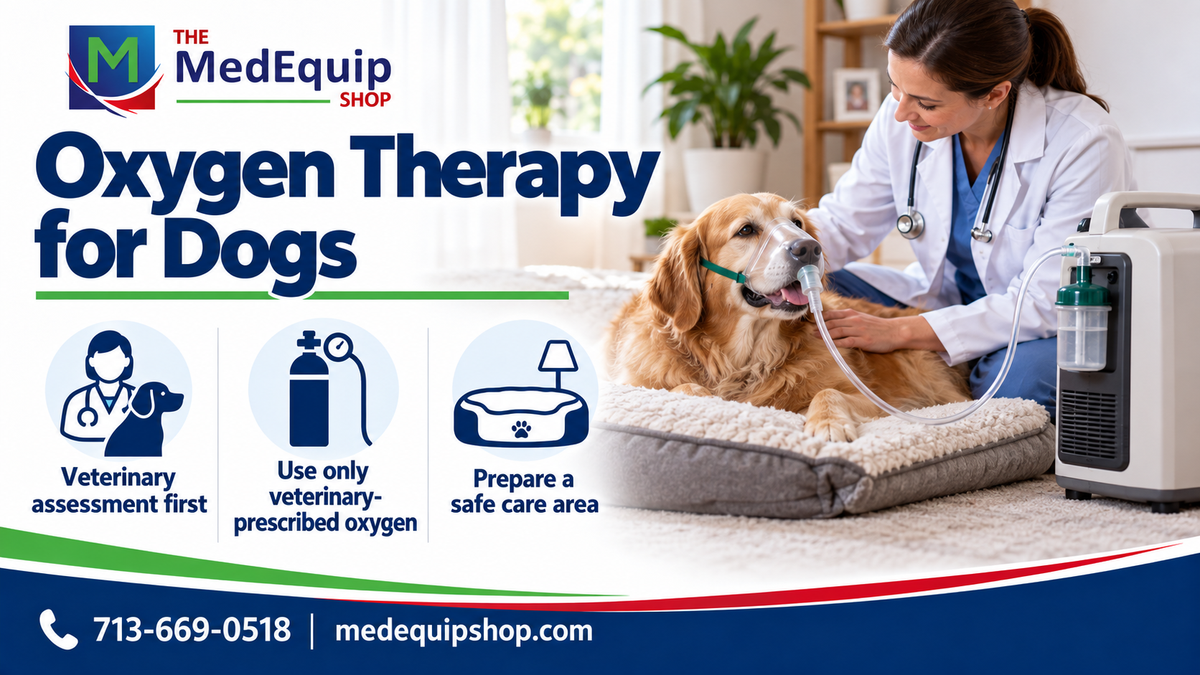

Home oxygen for a dog should be used only as part of a veterinarian-directed plan. A dog with new or worsening breathing difficulty needs prompt veterinary assessment; buying a concentrator or starting a home session should not delay emergency care.
When to seek urgent veterinary help
Contact an emergency veterinary hospital for difficulty breathing, collapse or other serious deterioration. Keep handling and stress to a minimum while following the hospital’s instructions for transport.
Let the veterinarian specify treatment
The veterinarian determines whether oxygen is appropriate, the delivery equipment, flow, duration and monitoring. Do not choose a flow based on a human oxygen prescription or adjust it in response to a consumer pulse-oximeter reading.
Confirm an appropriate home setup
Ask the veterinarian and equipment supplier about compatibility, ventilation, fire precautions, animal supervision and a backup plan. Do not improvise a sealed enclosure or fasten a mask in a way that restrains breathing or prevents the dog from moving away.
Monitor using the veterinary plan
Learn which signs need an immediate call, when reassessment is required and what to do if the device alarms or power fails. Changes in breathing require clinical advice, not just an increase in oxygen flow.
Ask about equipment after assessment
If your veterinarian recommends home oxygen equipment, contact MedEquip Shop about oxygen rental availability and confirm that the proposed equipment matches the veterinary instructions.
Frequently asked questions
Can I start oxygen for my dog without veterinary advice?
No. A veterinarian must assess the breathing problem and direct treatment.
Should home oxygen delay an emergency veterinary visit?
No. New or worsening breathing difficulty requires prompt veterinary assessment.
Can I choose the flow from a home pulse oximeter?
Do not select or adjust treatment from a consumer reading. Follow the veterinarian’s monitoring and flow instructions.
Can I make a sealed oxygen enclosure myself?
Do not improvise an enclosure. Ask the veterinarian for an appropriate delivery setup and ventilation requirements.
What if the equipment alarms or my dog gets worse?
Follow the veterinarian’s emergency plan and contact the veterinary hospital promptly.