

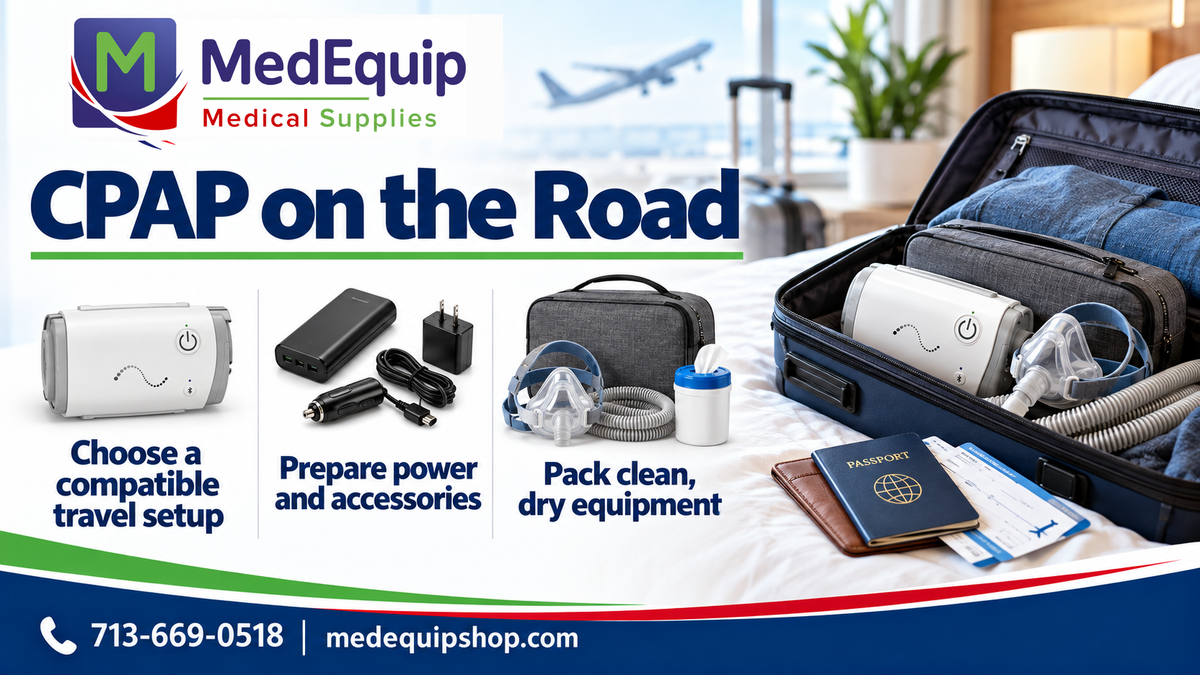

If you’re taking a short trip, your regular CPAP may be the simplest choice. A dedicated travel machine can save space if you travel often. Compare the complete setup, including the mask, tubing, humidification and power, before switching.
Start with your travel routine
Think about how often you fly, how much room you have in your bag and where you’ll plug in overnight. If you plan to use therapy on board, contact the airline before departure and check its device and battery requirements.
Check what carries over from home
Some travel machines use dedicated tubing, mask connectors or waterless humidification accessories. Check the exact combination before ordering, and ask your equipment provider how to set up your prescribed therapy on a travel device.
Run a practice setup
Connect your travel setup at home. Pack the approved power supply and any compatible adapters, and empty the water chamber before transport if your machine uses one. See the ResMed AirMini user guide.
Frequently asked questions
Can I take my CPAP machine on a plane?
CPAP machines can generally be transported as medical devices. Confirm the airline’s requirements and distinguish transport rules from approval for in-flight use.
What power source should I use during a flight?
Ask the airline about power and battery requirements. Use a battery and cables compatible with the exact machine and follow current FAA and airline rules.
How should I clean CPAP equipment while traveling?
Follow the mask and machine manufacturer’s washing instructions. Wipes do not replace washing where it is required; allow cleaned parts to dry as instructed.
What if I forget a CPAP accessory?
Contact the supplier with the exact machine or mask model to identify a compatible replacement and confirm stock and delivery arrangements.
Which documents should I carry when traveling internationally?
Carry your prescription and relevant manufacturer air-travel information. Check the airline and destination’s documentation requirements before departure.