

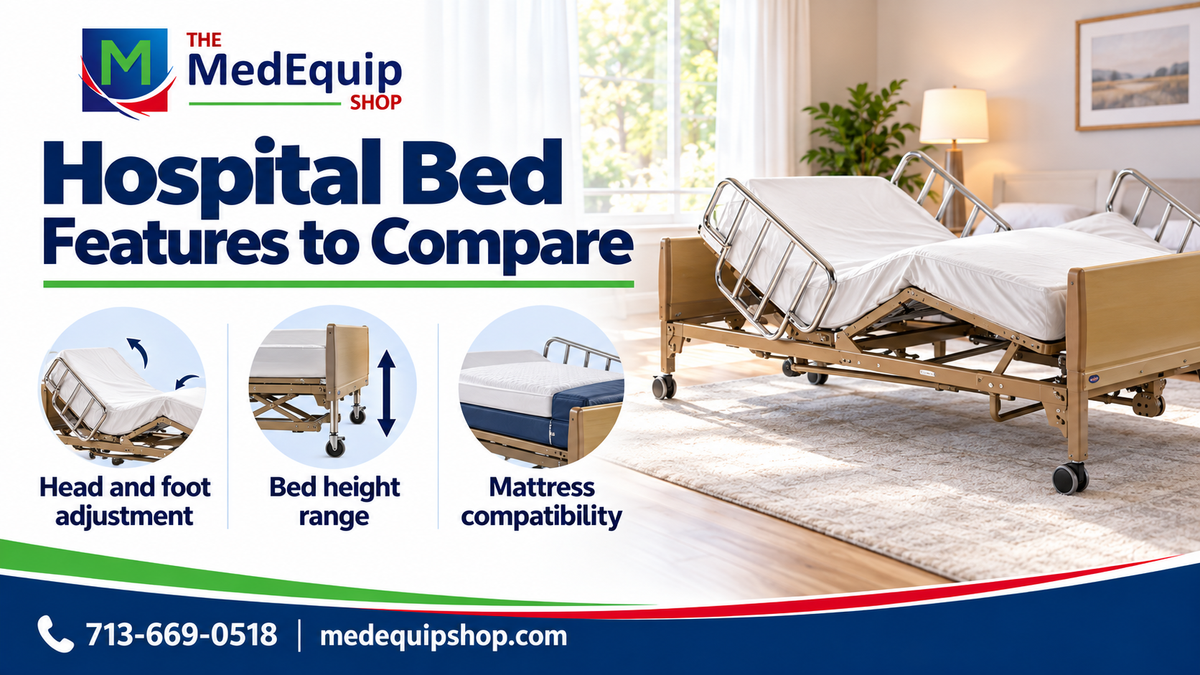

Hospital beds are a vital part of ensuring patient comfort and safety, especially for those who need long-term care. Whether for in-home care or a medical facility, selecting the right hospital bed can make a huge difference in the patient’s quality of life and the caregiver's efficiency. With many options available in the market, it can be overwhelming to decide which features are most important. In this guide, we will walk you through the key features to consider when purchasing a hospital bed, helping you make an informed decision.
1. Adjustability Features
Compare head, foot and height adjustment with the positioning and transfer requirements in the care plan. Repositioning and compatible surfaces may support pressure-injury management; a bed alone does not prevent injuries.
- Height Adjustment: Allows the bed to be raised or lowered to help with easier access for caregivers and promote better circulation for the patient.
- Head and Foot Elevation: Patients can have the upper body raised for easier breathing or eating, and the lower body can be elevated to reduce swelling or assist with movement.
Some models offer Trendelenburg or reverse Trendelenburg positioning. Use special positioning only when appropriate to the clinical plan and equipment instructions.
2. Weight Capacity
When purchasing a hospital bed, it's important to consider the weight capacity of the bed. Different models cater to different weight ranges, and selecting the right one ensures both comfort and safety for the patient. Ensure the hospital bed supports the weight of the patient plus any equipment or extra items (such as mattresses or cushions).
- Rated capacity varies by bed. Confirm the manufacturer’s patient-weight and total-load limits for the exact model.
- Heavy-duty Capacity: For patients who weigh more than the standard range, heavy-duty beds are available that support up to 600 lbs.
3. Safety Features
Safety is a top priority when choosing a hospital bed, especially for elderly patients or those with limited mobility. A hospital bed should offer several built-in safety features:
- Rail compatibility and use require an individual assessment. Rails can create entrapment or climbing risks and are not a universal fall-prevention measure.
- Locking Mechanisms: Hospital beds should have locking mechanisms to prevent accidental adjustment, ensuring that the patient stays in a safe position while resting or sleeping.
- Brakes and Casters: Look for hospital beds with locking casters or wheels, making it easier to move the bed but ensuring it stays in place when required.
4. Comfort Features
Comfort plays a major role in a patient’s healing and overall well-being. Many hospital beds now come with features designed to maximize comfort:
- A compatible pressure-redistribution surface may support the skin-care plan, but it does not eliminate pressure injury risk.
- Memory Foam or Gel Mattresses: These types of mattresses provide extra cushioning and support, which is ideal for long-term use.
- Quiet Operation: Check that the bed's motors or adjusters operate quietly, so they don’t disturb the patient or caregiver during the night.
5. Ease of Use for Caregivers
A hospital bed isn’t just about the patient’s comfort—it's also about making caregiving easier. Look for beds with intuitive controls that can be easily accessed by caregivers, and beds that make tasks like repositioning the patient simpler.
- Electric Controls: Most modern hospital beds feature electric controls that allow caregivers to adjust the position of the bed with the push of a button.
- Hand Controls: Some models offer hand-held controllers for caregivers to adjust the bed without having to move from their position.
- Easy Maintenance: Ensure the bed is easy to clean, with smooth, durable surfaces that prevent dirt from accumulating and are easy to wipe down.
6. Bed Mobility
For some patients, it’s important that the hospital bed be movable for easier access or for transport. Many hospital beds come with casters (wheels), which help move the bed from one room to another. Check that the casters are of high quality and lock securely to ensure stability.
7. Customization Options
Hospital beds come in various sizes, including twin, full, and bariatric sizes. Consider the space available in the room where the bed will be placed, and choose a model that accommodates the patient’s size and needs. Many hospital beds also offer additional accessories such as adjustable rails, overbed tables, and lift systems.
Frequently asked questions
What’s the difference between a standard hospital bed and an adjustable bed?
Standard beds offer basic functionality, while adjustable hospital beds allow customized positioning of the head, feet, and height. This makes hospital beds more suitable for medical care and patient comfort.
Do I need a prescription for a hospital bed?
Prescription requirements depend on the equipment and payment route. A practitioner’s order and documentation are generally needed for insurance coverage; confirm requirements with your supplier and plan.
Are hospital beds available for home use?
Yes, hospital beds are available for home use. Many medical equipment suppliers offer hospital beds designed for residential care. You can explore options at Medequip Shop’s Hospital Beds.
How do I confirm the complete bed system is compatible?
Confirm the exact frame, mattress dimensions, rail compatibility and load limits with the manufacturer or supplier.
Does MedEquip Shop bill Medicare for a hospital bed?
No. MedEquip Shop is cash-pay. Confirm insurance eligibility and supplier requirements before buying or renting.